
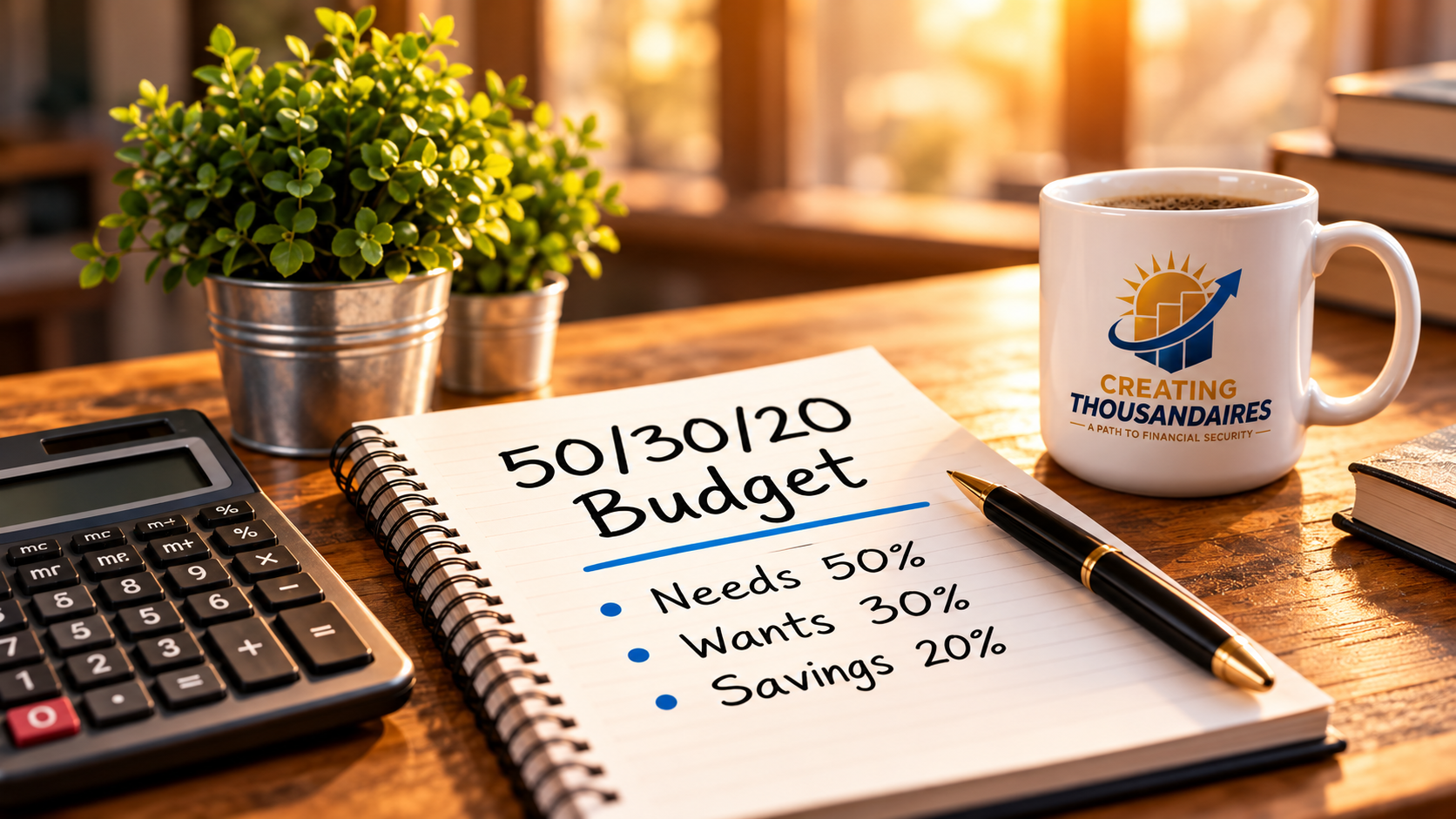
Budgeting doesn't have to be complicated. But when you're trying to make ends meet, does the popular 50/30/20 rule actually work? Let's look at what it means, where it helps, and when you may need a different approach.
What Is the 50/30/20 Budget Rule?
If you've spent much time looking for budgeting advice, you've probably come across the 50/30/20 rule.
It's one of the most popular approaches to managing money because it's easy to understand. Instead of tracking dozens of spending categories, you divide your take-home income into three groups:
- 50% for needs: Housing, groceries, utilities, transportation, insurance, and other essential expenses.
- 30% for wants: Dining out, entertainment, hobbies, vacations, and nonessential purchases.
- 20% for savings and additional debt payments: Emergency savings, retirement contributions, and payments above the required minimum on debts.
The idea is simple. Cover your necessities, leave room to enjoy life, and consistently put money toward improving your financial future.
On paper, it sounds like a pretty good plan. But does it work for everyone?
Not necessarily. And understanding why is just as important as understanding the rule itself.
What the 50/30/20 Rule Looks Like in Real Life
Let's say your household brings home $4,000 per month after taxes and payroll deductions.
Using the 50/30/20 rule, your budget would look like this:
| Category | Percentage | Monthly amount |
|---|---|---|
| Needs | 50% | $2,000 |
| Wants | 30% | $1,200 |
| Savings and extra debt payments | 20% | $800 |
| Total | 100% | $4,000 |
That means you'd have $2,000 to cover housing, utilities, groceries, transportation, insurance, and other necessities.
You'd have $1,200 available for things you enjoy, and $800 would go toward building savings, investing, or reducing debt faster.
If your expenses fit comfortably within those amounts, the system can work quite well.
But here's where things get interesting. What happens when your rent or mortgage alone is $1,500?
That leaves just $500 for groceries, utilities, transportation, insurance, and everything else your household needs. For many families, that's simply not realistic.
And that's the biggest weakness of treating the 50/30/20 rule as something everyone should be able to follow.
Why the Rule Doesn't Work for Every Household
I've spent nearly four decades working with people from different backgrounds and financial circumstances. One thing I've learned is that a plan can look excellent on paper and still be completely impractical for the person expected to follow it.
Budgeting is no different.
The cost of living varies dramatically depending on where you live, the size of your family, your income, and your responsibilities.
Someone earning $100,000 a year may have considerably more flexibility than a family earning $40,000, even if both households make responsible financial decisions.
Housing costs alone can make a major difference.
Add groceries, childcare, transportation, healthcare, and insurance, and some families find that essential expenses consume 60%, 70%, or even more of their take-home income.
That doesn't automatically mean they're irresponsible with money. It may simply mean their income and necessary expenses don't fit neatly into a popular budgeting formula.
A good budget should reflect your actual financial situation, not make you feel like you're failing because you can't meet someone else's percentages.
Understanding the Difference Between Needs and Wants
One of the trickiest parts of the 50/30/20 rule is deciding which expenses belong in each category.
Some are obvious. Your electric bill is a need. A weekend getaway is a want.
But other expenses aren't so clear.
Take transportation. If you need a vehicle to get to work, reliable transportation is essential. But that doesn't necessarily mean every feature or upgrade on an expensive vehicle is a necessity.
Groceries are another example. Food is obviously a need, but some convenience foods and premium purchases may fall closer to wants.
A phone is practically essential for many people today. However, the latest high-end model may not be.
The purpose isn't to criticize every purchase. It's to become more aware of where your money goes and which expenses you can realistically control.
There's also an important distinction when dealing with debt. Required minimum payments generally belong with your essential obligations. Extra payments intended to eliminate debt faster belong in the 20% category.
And if retirement contributions are already deducted from your paycheck, account for those contributions when evaluating your savings rate. Otherwise, you may underestimate how much you're already saving.
What If Your Needs Exceed 50%?
Let's imagine another household bringing home $4,000 per month.
Their actual expenses look like this:
| Category | Monthly amount | Percentage |
|---|---|---|
| Needs | $2,800 | 70% |
| Wants | $600 | 15% |
| Savings and extra debt payments | $600 | 15% |
| Total | $4,000 | 100% |
This family isn't following the traditional 50/30/20 rule. They're following a 70/15/15 budget.
And depending on their circumstances, that may be a perfectly reasonable approach.
They're covering their necessities, limiting discretionary spending, and still directing $600 per month toward their financial goals.
That's $7,200 per year before interest or investment returns.
Would it make sense to tell this family they're budgeting incorrectly simply because their percentages don't match the popular formula? Of course not.
The percentages are a guideline, not a financial law.
How to Build a Budget That Actually Works
Instead of forcing your finances into predetermined percentages, I recommend starting with your real numbers.
First, calculate your take-home income. Use the money actually available to your household after taxes and payroll deductions. If your income changes from month to month, consider using a conservative estimate based on your recent earnings.
Second, list your essential expenses. Include housing, utilities, groceries, transportation, insurance, minimum debt payments, and other necessary obligations. Don't forget expenses that arrive quarterly or annually.
Third, review your discretionary spending. Look at dining out, entertainment, subscriptions, shopping, and other purchases you can adjust.
Finally, determine what you can realistically put toward savings and additional debt reduction.
If you're able to save 20%, that's excellent. If 10% is realistic, start there. If you can manage only a few dollars right now, that can still be a meaningful beginning.
The goal is to build a budget that you can maintain, not one that looks impressive for a month and then falls apart.
Our free Budget Calculator can help you see how your income and expenses fit together.
Don't Forget About Irregular Expenses
One budgeting mistake deserves special attention.
People often plan for their regular monthly bills but forget about expenses that don't occur every month.
Car repairs, annual insurance premiums, school supplies, holiday spending, and medical expenses can catch a household off guard.
These expenses aren't always emergencies. Many are predictable, even if the exact amount or timing isn't.
A useful approach is to estimate what you spend on these items over a year and divide that amount by twelve.
For example, if you expect approximately $1,200 in irregular expenses annually, setting aside $100 per month can help prepare you for them.
This is sometimes called a sinking fund.
It keeps money reserved for expected expenses separate from your emergency savings.
And it can prevent a reasonably good budget from being disrupted by bills you knew would eventually arrive.
When Should You Adjust Your Budget?
Your budget shouldn't be something you create once and never revisit.
Income changes. Families grow. Prices increase. Debts get paid off. Financial priorities evolve.
That's why I recommend reviewing your budget regularly, especially when something significant changes.
You might discover that your essential expenses have increased and your savings goal needs to be adjusted temporarily.
Or perhaps you've paid off a car loan and suddenly have an additional $350 per month available.
Instead of automatically spending that extra money, you could redirect some or all of it toward savings, debt reduction, or retirement.
Those decisions can make a substantial difference over time.
A budget is simply a tool to help you make those decisions intentionally.
Coffee with Dave: A Final Thought
I've always believed that the best plans are the ones people can actually put into practice.
The 50/30/20 rule is a useful starting point. It encourages balance, reminds us to distinguish needs from wants, and makes saving money part of the conversation.
But it isn't the only way to manage money.
If your budget works better at 60/20/20 or 70/15/15, there's nothing wrong with that.
What matters is understanding your finances, meeting your obligations, making thoughtful decisions, and finding ways to move toward greater financial security.
Don't become so focused on following a formula that you lose sight of the real purpose.
The goal isn't to have a perfect budget. The goal is to build a better financial future.
And sometimes, that begins with making the best decisions you can with the money you have today.
— Dave