
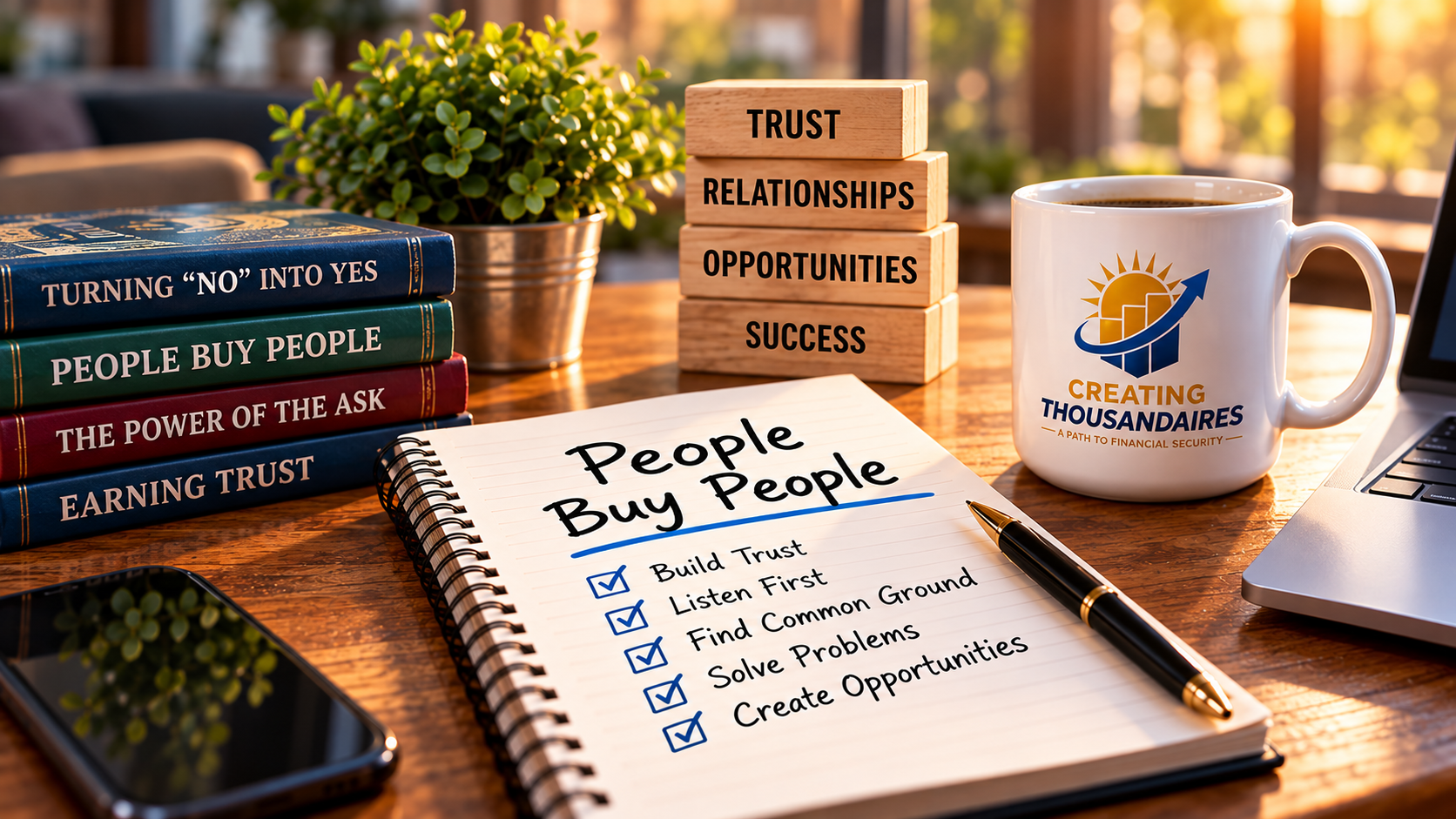
Success in business, in your career, and in everyday life often comes down to one thing: people. When you build genuine trust and stronger relationships, opportunities are more likely to follow.
It Starts With People
You can have a great product, an excellent service, or a competitive price. But if people don't know you, like dealing with you, or trust what you're saying, winning their business becomes much harder.
On the other hand, someone who feels comfortable with you may be willing to listen, ask questions, and come back when they need help. They might even recommend you to a friend.
That's the idea behind a phrase I've used for years: people buy people.
I've spent nearly four decades working with people through sales, business ownership, environmental consulting, management, and leadership. Different industries have different products and problems, but the human side of business is remarkably consistent. People want to feel heard, respected, and confident about the person they're dealing with.
And this isn't only about selling. The same principles help us become better coworkers, leaders, friends, and family members.
What Does “People Buy People” Really Mean?
It doesn't mean personality is more important than quality. It certainly doesn't mean you can charm someone into accepting a bad product or a promise you can't keep.
It means that relationships influence how people evaluate what we offer. When two businesses provide similar services, the experience of working with the people involved can make the difference.
Think about the last time you hired someone to work on your home. Maybe you received two estimates. One person rushed through the visit, barely answered your questions, and seemed annoyed when you asked about the details. The other explained the work, listened to your concerns, and followed up as promised.
Even if their prices were close, which person would you feel more comfortable hiring?
The answer often comes down to trust. But trust isn't created by a clever sales pitch. It's earned through the way we treat people.
1. Listen Before You Try to Convince
One of the easiest mistakes in any conversation is concentrating on what we're going to say next instead of listening to what the other person is telling us.
I've seen salespeople explain every feature of a product before discovering what the customer actually needs. I've also seen managers offer solutions before an employee has finished describing the problem.
Sometimes the most valuable thing you can do is ask a good question and give the other person room to answer.
Try questions like “What matters most to you?” or “What are you hoping to accomplish?” Then pay attention. The answer may be different from what you expected.
Listening shows respect. It also helps you avoid recommending something that isn't a good fit.
2. Be Genuinely Interested, Not Just Interesting
There's nothing wrong with being friendly, confident, or good at conversation. But people can usually sense when someone is simply waiting for a chance to talk about themselves.
Real connection starts with curiosity about the other person.
Learn what they're trying to accomplish. Remember something important they mentioned. Ask how a project turned out or whether a problem was resolved.
These aren't tricks to get someone to like you. They're habits that show you recognize the person in front of you as more than a transaction.
That distinction matters in business, and it matters just as much in everyday relationships.
3. Do What You Say You're Going to Do
Trust is built through small promises kept over time.
If you say you'll call on Tuesday, call on Tuesday. If you promise an estimate by Friday, deliver it—or let the customer know promptly if something changes.
In environmental consulting, I learned how much clients depend on accurate information and reliable follow-through. A missed deadline or an unanswered question can create problems well beyond one conversation.
The same is true in retail, service businesses, and personal relationships. Reliability tells people they can count on you.
And when you make a mistake, acknowledge it. A straightforward explanation and a sincere effort to make things right usually build more confidence than excuses.
4. Find Common Ground Without Pretending
People naturally feel more comfortable when they discover something they share. It might be a hometown, a hobby, a family experience, or a similar challenge.
Common ground can make a conversation easier, but it should never be manufactured. You don't need to pretend to enjoy something or agree with every opinion just to create a connection.
Sometimes the most meaningful common ground is simply understanding the other person's goal. You both want the project finished correctly. You both want a problem solved. You both want a good outcome.
That gives you something honest to work toward together.
5. Help People Make Good Decisions
In sales, it's tempting to measure every conversation by whether someone buys today. But that approach can lead to pressure, rushed decisions, and disappointed customers.
I've found that a better long-term approach is to help people understand their options and make a decision that fits their needs.
Sometimes that means recommending a less expensive choice. Sometimes it means telling someone that what you're offering isn't right for them.
It may cost you an immediate sale. But it also demonstrates that your advice isn't determined entirely by what benefits you.
People remember that kind of honesty. And when they're ready to buy, they often remember whom they trusted.
6. Relationships Create Opportunities Beyond Sales
The benefits of strong relationships extend far beyond customer transactions.
Employees who communicate well may find it easier to collaborate and earn additional responsibilities. Business owners who treat customers fairly can benefit from referrals and repeat business. Leaders who listen and follow through create an environment where people are more willing to speak up.
Even someone exploring a side business or affiliate marketing can benefit from this principle. Recommending something useful to a friend is different from treating every friendship as a sales opportunity.
If your first thought is always “What can I get from this person?” people may eventually notice. If your first thought is “How can I help?” you're building a very different kind of relationship.
Not every connection will lead to an opportunity, and that's fine. A relationship shouldn't have to produce a financial return to be worthwhile.
What Trust Looks Like in Everyday Life
Imagine a customer calls with a question about a product after they've purchased it. The sale is already complete. You could give a quick answer and move on, or you could take a few extra minutes to make sure the problem is resolved.
Those extra minutes may matter more to the customer than anything you said before the sale.
Or imagine a coworker admits they don't understand an assignment. You could make them feel embarrassed, or you could help them work through it. One response creates distance; the other creates confidence.
These aren't dramatic gestures. They're ordinary moments where people decide whether you're someone they can rely on.
A Simple Challenge for Your Next Conversation
The next time you speak with a customer, coworker, or someone you care about, try three things:
- Ask one thoughtful question before offering advice.
- Listen without interrupting or planning your response.
- Follow through on one small commitment you make.
None of these actions requires special training, an outgoing personality, or a sales position. But practiced consistently, they can change how people experience working and talking with you.
Coffee with Dave: A Final Thought
When I look back over the businesses I've been involved in and the people I've worked with, I don't remember every sale or every meeting. I remember the relationships.
I remember people who kept their word, treated others fairly, and made difficult situations easier simply by being dependable. I also remember how much harder things became when trust was missing.
That's why I believe communication isn't just a business skill. It's a life skill.
You don't have to be the most outgoing person in the room. You don't need a perfect presentation or a clever response to every objection. You need to care about people, listen to what matters to them, and be someone they can trust.
People may forget the details of what you offered. They're much less likely to forget how you treated them.
— Dave